Blogs > What Can I Do After BSc Nursing ?
What Can I Do After BSc Nursing ?
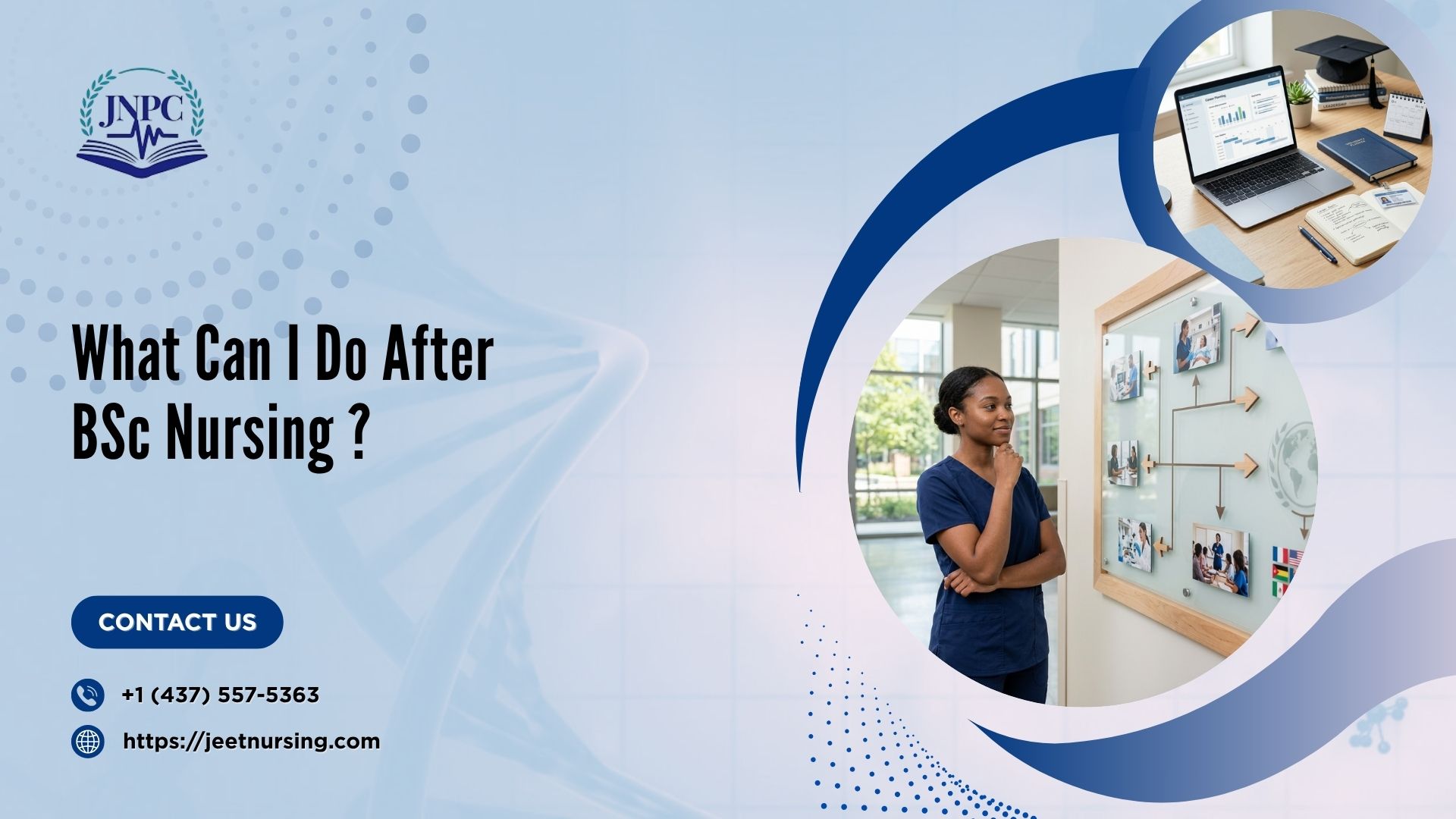
You have finished your degree, your internship is done, and your family keeps asking, "So, what's next?" If you are searching what can I do after BSc nursing, you are not alone. This is one of the most common questions nursing graduates ask, and the honest answer is that you have several good options.
You can start working in a hospital, prepare for a government exam, continue to a master's course, or build an international career. Each road needs different preparation, and the right nursing prep depends on your goal, your finances, and your timeline.
This guide walks through every option in plain language. By the end, you will know the real scope after BSc nursing, which courses are worth considering, and how to pick a path that fits your life.
Key Takeaways
You have four main roads after BSc Nursing: start working, apply for government nursing jobs, study further, or build a nursing career abroad. You can combine them.
Sort out the basics first. Complete your council registration, keep your documents organised, and collect proper experience letters. They keep every option open.
Working first is a smart choice. One to two years of clinical experience helps with master's admissions, government exams, and overseas applications.
Government jobs follow official notifications. Exams like AIIMS NORCET and roles like Community Health Officer have their own eligibility rules, so always check the official source.
Further study works best with a clear goal. M.Sc Nursing suits specialists and educators, while MBA/MHA, MPH, and clinical research suit management, public health, and research paths.
Working abroad means a licensing exam. NCLEX-RN is the main route for registered nurses in the USA and Canada. NCLEX-PN, REx-PN, and CPNRE apply to practical nursing pathways, depending on the regulator.
Nursing roles beyond the bedside are real options. Clinical research, informatics, case management, and telehealth are a few examples.
A plan beats random effort. Pick one goal, set a 12-month timeline, and build your skills step by step.
Your Four Main Roads After BSc Nursing at a Glance
Almost every choice after BSc nursing falls into one of four roads. You can also combine them. For example, many nurses work for a year or two, then apply for a master's or an overseas licence.
There is no single "best" road. The right one is the one that matches your goals right now. It can change in a year or two.
First Things to Sort Out Right After Graduation
Before you choose a road, take care of a few basics. They keep every option open.
1. Registration. Make sure your registration with the State Nursing Council (and the Indian Nursing Council process that applies to you) is complete. Most hospitals, government departments, and foreign regulators will ask for it.
2. Your documents. Keep both soft and hard copies of your degree, marksheets, internship certificate, registration certificate, and ID proofs. Overseas applications often need documents to be sent directly from your college or council, which takes time. Ask for them early.
3. Experience letters. Any hospital where you work after graduation should give you a proper experience certificate with your job title, department, and dates. Regulators in other countries look at these closely.
4. A short list of questions. Ask yourself:
Do I need to earn it soon?
Do I enjoy bedside care, or would I prefer teaching or management?
Am I open to living in another country?
Write your answers down. They will make the next sections much easier to use.
Road 1 — Start Working as a Nurse
Working first is a practical choice. You earn, build confidence, and learn what you actually enjoy.
Private hospitals usually hire throughout the year and offer faster entry. Shifts can be demanding, but you meet many case types quickly.
Government hospitals generally offer steadier hours and benefits, but posts are filled through official recruitment. See Road 2 for that route.
Where you can work:
General wards and medical-surgical units
ICU, emergency, and operation theatre (OT)
Paediatric, maternity, and neonatal units
Dialysis and oncology units
Home care and community clinics
Corporate, industrial, and school health settings
How careers usually grow: staff nurse → senior nurse → in-charge → nursing supervisor → nursing superintendent. Specialisation and additional study can speed this up.
A tip many graduates miss: choose your first job for learning, not only salary. One to two years in a busy ICU, emergency department, or OT builds skills that help later with master's admissions, government exams, and international applications.
Road 2 — Government Nursing Jobs
Government roles are popular because of job stability and defined career progression. Here are the main routes.
Nursing Officer posts. These are advertised by AIIMS and other central institutes, ESIC, railway hospitals, and state health departments. The AIIMS NORCET (Nursing Officer Recruitment Common Eligibility Test) is one of the most widely followed national exams. Recent editions accepted BSc . (Hons) Nursing, BSc . Nursing, or Post-Basic BSc . Nursing candidates, subject to each notification's rules.
Community Health Officer (CHO). Under the National Health Mission, CHOs run health and wellness centres in communities. Candidates are usually required to complete a bridge or certificate programme in community health. Check your state's notification for the details.
Defence nursing. The Military Nursing Service recruits qualified nurses through separate rules and selection steps.
How to prepare:
Follow official websites and notifications for age limits, registration needs, and exam dates. These change from cycle to cycle.
Practise previous papers and revise core nursing subjects like medical-surgical, pharmacology, community health, and maternal-child nursing.
Prepare documents in advance, including category certificates if applicable.
Treat third-party websites as a starting point only. Always confirm details on the official recruiting body's page.
Road 3 — Study Further
Further study can deepen your clinical expertise, open teaching roles, or move you into management and research. Here is a quick after BSc nursing courses list:
Which of these courses after BSc nursing is the best? That depends on what you want your day to look like in five years. If you love direct patient care, choose a clinical M.Sc or diploma. If you enjoy teaching, go for an M.Sc and aim for educator roles. If you are drawn to systems and people management, look at administration. A master's degree helps most when it matches a clear goal.
Admission rules, entrance exams, and eligibility differ by institution and change over time, so always check the current criteria with the university or regulator before applying.
Road 4 — Work Abroad
For many graduates, this is the most exciting road and also the one with the most confusing paperwork. Here is a simple map.
The basic idea: each country (or province) has its own regulator. They check your education, then ask you to pass a licensing exam before you can practise as a nurse.
Most BSc nursing graduates aim for RN licensure, which makes NCLEX-RN the main target. The practical nurse exams (NCLEX-PN, REx-PN, CPNRE) apply when your pathway or choice is a PN/LPN licence. Which one is allowed for you depends on the regulator's assessment of your education, so always confirm eligibility first.
Typical steps, in order:
Check the regulator's requirements for the country or province you want.
Complete credential assessment (for Canada, this usually begins with NNAS for nurses).
Get your eligibility approved.
Prepare for and pass the required exam.
Complete registration and any language or other requirements.
Australia works a little differently. Nurses apply through AHPRA and the nursing board, and the assessment steps are not the same as NCLEX. Review the official criteria before you plan your timeline.
If you want a deeper walkthrough, the NCLEX exam for Indian nurses guide explains eligibility, registration, and exam format step by step, and the licensure roadmap for Indian nurses heading to Canada covers NNAS and provincial rules.
Where nursing prep fits in. Passing a licensing exam is about clinical judgement, not memorising facts, and a structured plan makes a big difference. Jeet Nursing Prep Centre offers courses for NCLEX-RN, NCLEX-PN, REx-PN, and CPNRE in live, recorded, and crash-course formats, so you can match your study style and exam date. Whether you use us or another provider, choose one that teaches the exam format you actually need.
Careers Beyond the Bedside
Not everyone wants a ward job forever, and that is completely fine. Your nursing knowledge is useful in many other roles:
Clinical research coordinator: supports trials, patient consent, and data records.
Medical coding and documentation: turns patient records into standardised codes for billing and reporting.
Nursing informatics: helps hospitals use electronic records and digital tools safely.
Case management and patient advocacy: helps patients and families navigate treatment plans and insurance.
Telehealth nursing: supports patients by phone or video.
Health writing and education: creates patient guides, articles, and training content.
Corporate and occupational health: manages employee wellness and workplace safety.
Healthcare entrepreneurship: home-care services, wellness clinics, or training ventures, once you have enough experience.
Many of these roles ask for short certificate courses or a few years of clinical experience first, so check job listings in your area of interest.
Which Road Is Right for You? A Simple Decision Guide
Read these statements and see which one sounds most like you.
"I need to start earning soon." Begin with Road 1, and prepare for government exams alongside it.
"I want a stable, long-term career in India." Focus on Road 2, with a hospital job as a stepping stone.
"I love teaching or want to specialise." Road 3, likely an M.Sc, is your best match.
"I want to live and work overseas." Road 4. Start the credential and eligibility steps early, since they take time.
"I'm not sure bedside nursing is for me." Explore the non-clinical careers above and test one with a short course or internship.
A quick self-check:
Do I need income within the next three months?
Can I afford further study right now?
Am I willing to relocate?
Do I enjoy direct patient care?
Where do I want to be in five years?
If your answers point in two directions, that is normal. You can combine roads, for example by working in India while you complete eligibility and exam preparation for abroad.
Job vs. Higher Study: A Side-by-Side Comparison
A middle path works well for many nurses: work for one to two years, then study with a clearer sense of what you want. Some master's programmes and overseas regulators also value documented clinical experience.
Skills and Certificates That Boost Your Profile
Whichever road you take, these make your profile stronger:
Life-support certification such as BLS (and ACLS where relevant).
Clinical skills in high-demand areas, such as critical care, IV therapy, wound care, and dialysis.
Communication and English proficiency. Many overseas pathways need an English test, and clear communication helps in every setting.
Basic computer and electronic record skills.
Medication safety and dosage calculation. These are tested in many exams and used daily at work.
Clinical judgement. Practice reading a patient situation, spotting priorities, and choosing the safest action.
Basic research awareness, especially if you aim for an M.Sc or Ph.D.
Short, recognised certificates tend to help more than a long list of unrelated ones. Choose a few that match your chosen road.
Common Mistakes to Avoid
Skipping or delaying registration. It can hold up jobs, exams, and applications.
Choosing a course only for the salary promise. Make sure the work itself suits you.
Joining unrecognised institutes. Always check approval with the relevant council or university authority.
Trusting recruitment agents who promise guaranteed jobs or visas abroad. Regulators and exam bodies publish official steps. Verify before paying anyone.
Starting your overseas process too late. Credential assessment and eligibility can take weeks or months, so begin early.
Ignoring official notifications. Exam dates, age limits, and fees change. Read the source, not only summaries.
Collecting experience without proof. Always get experience letters.
Studying randomly. Without a plan, nursing prep turns into stress. Pick one goal, set a timeline, and track progress.
A Sample 12-Month Plan After Graduation
Adjust this to your own situation. It is a template, not a rule.
If you want guided support with the abroad portion, Jeet Nursing Prep Centre can help you match the right exam to your pathway, but the timeline above works equally well for self-study.
Conclusion
So, what can I do after BSc nursing? The answer is almost anything in healthcare: hospital work, government service, a master's degree, international licensure, or a role beyond the bedside. The scope after BSc nursing is wide, and you do not have to decide everything at once.
Start with the basics: registration, documents, and experience. Then choose one road, set a timeline, and build your skills step by step. Good nursing prep is less about studying harder and more about studying with a clear goal and a realistic plan.
Final Thoughts
If you are leaning toward an international nursing career and want to understand which exam fits you (NCLEX-RN, NCLEX-PN, REx-PN, or CPNRE), the team at Jeet Nursing Prep Centre is happy to talk it through. Contact us for free exam guidance and a clear picture of your next steps.
Frequently Asked Questions:-
1. What can I do after BSc nursing?
You can work as a staff nurse, apply for government nursing officer posts, study for an M.Sc or other master's course, prepare for a licensing exam to work abroad, or move into non-clinical roles like clinical research or nursing informatics.
2. Which courses after BSc nursing are most useful?
M.Sc Nursing is the most common choice for specialisation and teaching. Post-basic diplomas suit nurses who want quick clinical specialisation, and MBA/MHA or MPH suit those drawn to management or public health. The most useful course is the one that fits your goal.
3. Is higher study necessary after BSc nursing?
No. You can build a strong career with a BSc degree, good experience, and the right certifications. Higher study helps most when your target role (such as educator or specialist) requires it.
4. Can I work abroad after BSc nursing?
Yes, but you must meet the licensing requirements of the country or province. This usually means credential assessment and a licensing exam, such as NCLEX-RN for registered nurse roles in the USA and Canada. Requirements differ by regulator, so check official sources.
5. What is the difference between NCLEX-RN, NCLEX-PN, REx-PN, and CPNRE?
NCLEX-RN is for registered nurse licensure in the USA and Canada. NCLEX-PN is for practical or vocational nurse licensure in the USA. REx-PN and CPNRE are practical nurse exams used in Canadian provinces, with REx-PN being used in most of them and CPNRE in select ones.
6. How long does NCLEX preparation take?
It varies with your background and study time. Many candidates plan for around three to four months of consistent study, and shorter crash programmes exist for those with an earlier exam date. A realistic plan matters more than speed.
7. Can I prepare for a licensing exam while working?
Yes. Many nurses study part-time using recorded lessons, practice questions, and a weekly schedule. Choose a format that fits your shift pattern.